

Every culture and faith has its way of marking time, reflecting on the past, and preparing for the future. In Judaism, Rosh Hashanah—the Jewish New Year—holds this sacred role. Unlike the secular New Year marked by fireworks, parties, and resolutions, Rosh Hashanah is deeply spiritual. It is a time of prayer, introspection, forgiveness, and renewal.
“Prayer is the language of the soul in conversation with God.”
– Rabbi Jonathan Sacks
Prayers lie at the very heart of Rosh Hashanah. They are not merely words recited but heartfelt expressions of humanity’s relationship with the Divine, a dialogue between the soul and its Creator. As Rabbi Jonathan Sacks once said, “Prayer is the language of the soul in conversation with God.”
This article explores Rosh Hashanah prayers in depth: their meanings, traditions, and spiritual significance. Whether you are new to Jewish traditions, curious about diversity in world religions, or seeking deeper understanding, this guide provides a humanized, detailed, and thoughtful journey into one of the most important aspects of Jewish life.
The Meaning of Rosh Hashanah

Rosh Hashanah literally translates to “Head of the Year.” It marks the beginning of the Jewish High Holy Days, also known as the Days of Awe (Yamim Noraim). Unlike a mere celebration of a calendar year, Rosh Hashanah is seen as the birthday of the world—the anniversary of creation.
“Rosh Hashanah is the day when we remember who we are and why we are here.”
– Rabbi Joseph B. Soloveitchik
It is both a joyful and solemn holiday: joyful because it celebrates life and renewal, solemn because it reminds Jews that they stand before God in judgment. According to Jewish tradition, Rosh Hashanah is the day when God opens the Book of Life, reviewing every individual’s deeds and determining their fate for the coming year.
Prayers, therefore, are central to this period. They are an opportunity to reflect, repent, and seek forgiveness. The philosopher Abraham Joshua Heschel once wrote, “Prayer begins at the edge of emptiness.” In this sense, Rosh Hashanah prayers represent a journey of filling that emptiness with sincerity, hope, and purpose.
The Structure of Rosh Hashanah Prayers
Rosh Hashanah prayers are extensive and deeply poetic. They are largely contained in a special prayer book called the Machzor, used only on High Holy Days. While the exact wording and melodies may vary by community (Ashkenazi, Sephardi, Mizrahi, etc.), the structure remains deeply symbolic.
1. Shacharit (Morning Service)
The day begins with Shacharit, the traditional morning prayers. These prayers include blessings of gratitude, psalms, and passages from the Torah. On Rosh Hashanah, special additions are included to emphasize themes of judgment, remembrance, and sovereignty.
2. Musaf (Additional Service)
Perhaps the most distinctive element of Rosh Hashanah prayers is Musaf, the additional service. Musaf contains three central sections:
Malchuyot (Kingship): Acknowledging God as the King of the universe.
Zichronot (Remembrances): Asking God to remember His covenant with humanity.
Shofarot (Shofar): Focusing on the sound of the shofar (ram’s horn) and its spiritual call.
Each section is accompanied by a series of biblical verses and concludes with the sounding of the shofar.
3. Amidah (Standing Prayer)
The Amidah, or “Standing Prayer,” is recited multiple times throughout the day. On Rosh Hashanah, it is lengthened with additional passages highlighting God’s role as judge and king. Worshippers stand in silent devotion, embodying humility before the Divine.
4. Avinu Malkeinu (“Our Father, Our King”)
One of the most famous prayers recited during Rosh Hashanah is Avinu Malkeinu. Its haunting melody and simple words reflect both intimacy and reverence: addressing God as both a caring father and a sovereign king. The prayer asks for mercy, forgiveness, and blessing.
5. Unetanneh Tokef
The Unetanneh Tokef prayer is one of the most powerful and sobering in Jewish liturgy. It describes how, on Rosh Hashanah, the destiny of every person is inscribed in the Book of Life and sealed on Yom Kippur. Lines such as “Who shall live and who shall die… who by fire and who by water” stir deep reflection.
Rabbi Sacks noted, “Unetanneh Tokef confronts us with the fragility of life and the preciousness of each day.”
The Sound of the Shofar: A Prayer Without Words

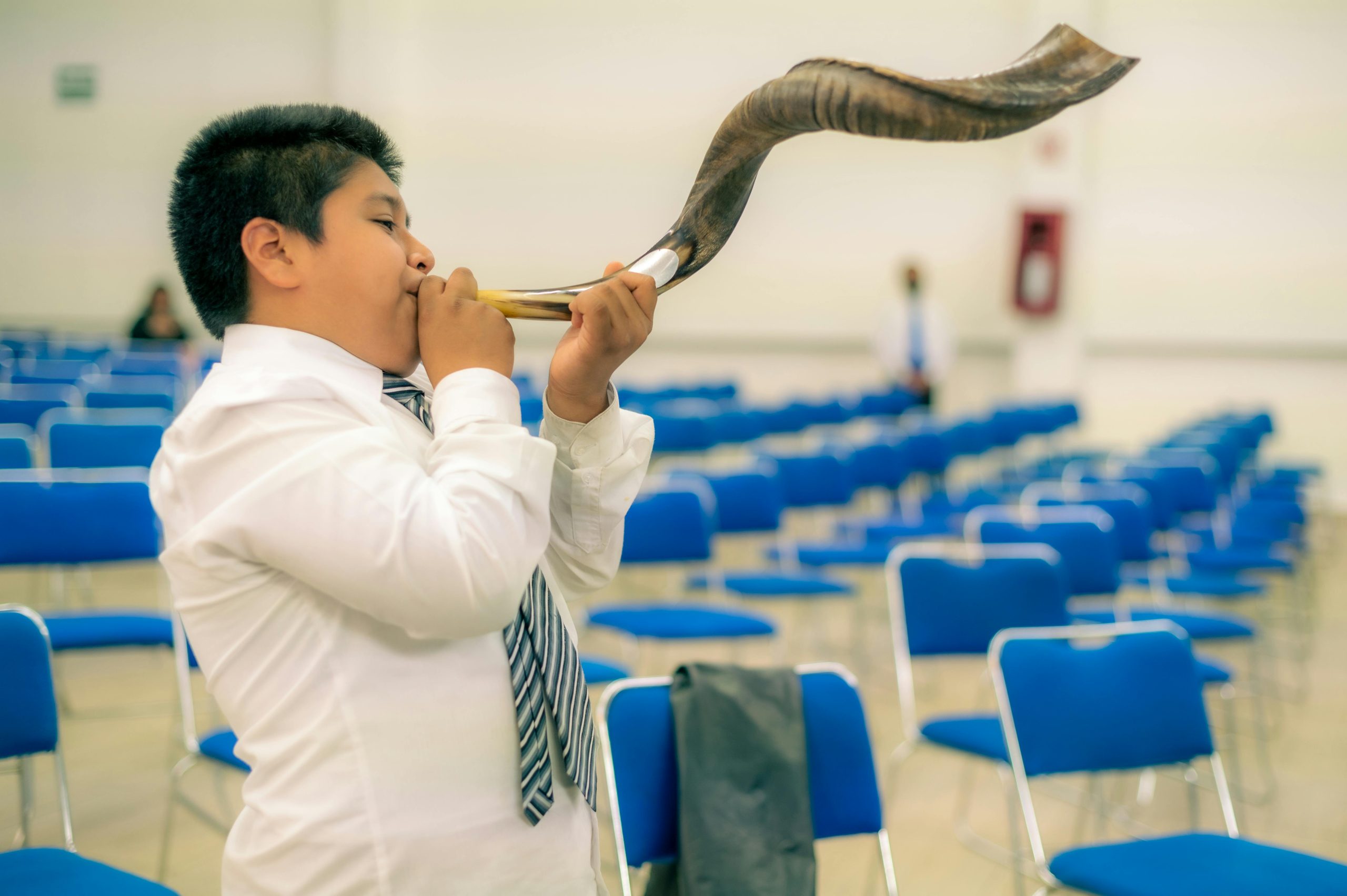
No exploration of Rosh Hashanah prayers is complete without the shofar, the ram’s horn. Its blasts—Tekiah, Shevarim, Teruah, Tekiah Gedolah—are not words but sounds that pierce the heart.
“Awake, you sleepers, from your slumber, and examine your deeds.”
– Maimonides
The shofar symbolizes awakening. It calls worshippers to repentance, reminds them of the binding of Isaac, and evokes the coronation of God as King. As Maimonides explained, the shofar’s cry says: “Awake, you sleepers, from your slumber… search your deeds and return in repentance.”
In many ways, the shofar itself is a prayer. It bypasses language and goes straight to the soul, expressing what words cannot.
Traditions Surrounding Rosh Hashanah Prayers
Prayers are not recited in isolation but within a rich tapestry of traditions:
The Machzor: The High Holy Day prayer book is filled with liturgy, poetry, and scriptural passages. Its special pages guide worshippers through the day’s emotional journey.
Synagogue Gatherings: Communities come together, often filling synagogues with larger attendance than at any other time of year. The collective voices in prayer amplify the sense of unity.
Tashlich Ceremony: On the afternoon of Rosh Hashanah, many Jews perform Tashlich, symbolically casting their sins into a body of water by throwing pieces of bread. This ritual complements the prayers of repentance.
Liturgical Music: Cantors and choirs sing melodies unique to the season, creating an atmosphere that is both solemn and uplifting.
The Spiritual Significance of Rosh Hashanah Prayers
Beyond their structure and beauty, Rosh Hashanah prayers serve a deeper spiritual purpose. They are not simply petitions for personal blessings but communal calls for renewal, justice, and peace.
Themes in the Prayers
Judgment and Mercy – The belief that God judges humanity yet tempers justice with compassion.
Remembrance – Asking God to remember His covenant and the deeds of ancestors.
Repentance – A chance for worshippers to acknowledge mistakes and commit to change.
Renewal – Beginning the year with a fresh heart and mind.
Human Connection
For many, Rosh Hashanah prayers are deeply emotional. They connect individuals to generations past who recited the same words. They also connect Jews worldwide, across diverse cultures and languages, in a shared spiritual rhythm.
As Heschel once said, “The test of authentic prayer is whether it leads to action.” Rosh Hashanah prayers inspire acts of kindness, justice, and personal growth throughout the year.
Modern Adaptations of Rosh Hashanah Prayers
In today’s world, Jewish communities observe Rosh Hashanah in diverse ways. Some attend traditional synagogue services, while others join online prayer gatherings. Translations and commentaries make the prayers more accessible to younger generations.
“Every generation must translate the prayers into its own language, without losing their eternal spirit.”
– Rabbi Zalman Schachter-Shalomi
Many modern rabbis emphasize the universal themes of Rosh Hashanah prayers—self-reflection, renewal, and hope—as values that can resonate with people of all backgrounds. Interfaith dialogues often highlight Rosh Hashanah as a moment for broader reflection on human responsibility and global unity.
Common Questions About Rosh Hashanah Prayers
How long are the Rosh Hashanah services?
Services can last several hours, often longer than on regular days due to additional liturgy and the shofar.
Do all Jews recite the same prayers?
While the core prayers remain consistent, variations exist between Ashkenazi, Sephardi, and other traditions.
Can non-Jews attend Rosh Hashanah services?
Yes, many synagogues welcome guests, though practices vary. It is encouraged to attend respectfully and with openness to learning.
Conclusion: The Eternal Voice of Prayer
Rosh Hashanah prayers are more than religious ritual; they are a profound dialogue between humanity and the Divine, between past and future, between the individual and the community. They remind us of life’s fragility and the endless possibilities of renewal. Each word, chant, and melody invites worshippers not just to look upward but also inward—to confront their choices, embrace forgiveness, and prepare for the journey ahead.
“Rosh Hashanah is not about the past we cannot change but the future we can shape.”
– Rabbi Jonathan Sacks
Through words like Avinu Malkeinu, through the haunting notes of Unetanneh Tokef, and through the piercing sound of the shofar, worshippers enter the New Year with humility, hope, and courage. The prayers bind together generations, carrying the weight of ancient tradition while speaking to the heart of modern life. They are at once timeless and timely, reminding us that while years may change, the need for reflection, mercy, and growth remains eternal.
His words capture the essence of these sacred days: that prayer is not an escape from life but a call to engage with it more fully, with greater compassion, and with a clearer vision.
These prayers, ancient yet alive, continue to guide hearts toward reflection, forgiveness, and a renewed commitment to life. They invite us to walk into the New Year not burdened by yesterday’s weight but lifted by tomorrow’s promise—a promise of healing, of reconciliation, and of a future shaped with intention.

0 comments